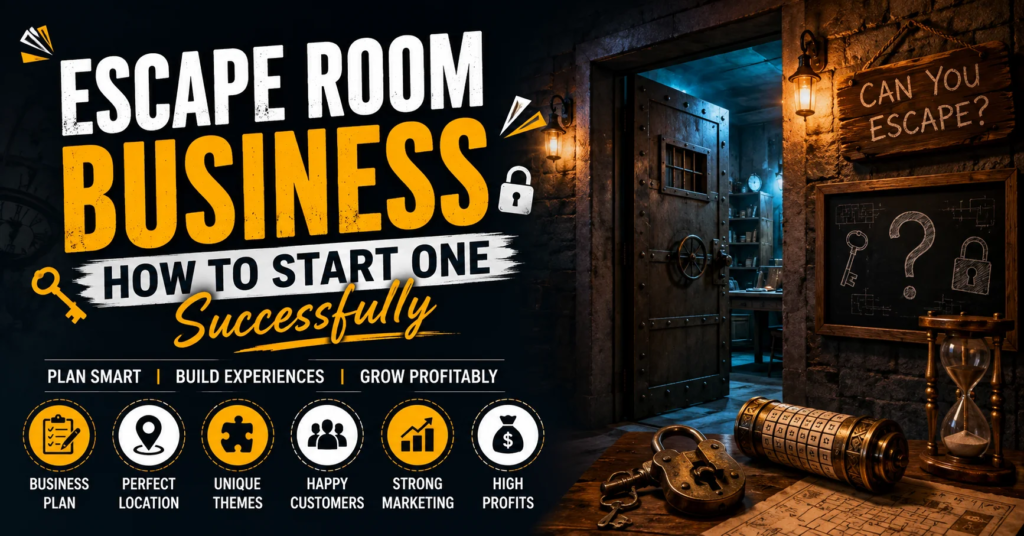
Starting an escape room business can be a profitable and exciting venture if you combine creative game design with smart business planning. The key steps include researching your local market, creating unique escape room themes, choosing the right location, obtaining licenses, investing in quality puzzles, and developing a strong marketing strategy. When managed well, an escape room business can generate recurring revenue through group bookings, corporate events, birthday parties, and tourism.
Why an Escape Room Business Is Worth Starting
The entertainment industry continues to evolve, and people are constantly searching for interactive experiences rather than passive activities. Escape rooms offer teamwork, problem-solving, and unforgettable memories, making them popular among friends, families, students, and businesses.
Unlike many entertainment businesses, escape rooms encourage repeat visits by introducing new themes and challenges. Customers who enjoy one room often return to try another.
From our observations of successful operators, businesses that regularly update puzzles and customer experiences tend to maintain stronger customer loyalty and better online reviews.
Understanding the Escape Room Business Model
Before investing money, understand how an escape room generates revenue.
The primary income sources include:
- Standard game bookings
- Corporate team-building events
- Birthday party packages
- School and college groups
- Tourist visitors
- Private event reservations
- Gift cards and merchandise
Most escape rooms charge customers per person, making larger groups more profitable.
Typical Startup Costs
| Expense | Estimated Cost |
|---|---|
| Commercial lease | Moderate to High |
| Room construction | High |
| Props and puzzles | Moderate |
| Technology and automation | Moderate |
| Insurance | Low to Moderate |
| Marketing | Moderate |
| Website and booking software | Low to Moderate |
Actual costs vary depending on city, property size, and room complexity.
Research Your Local Market
One of the biggest mistakes new owners make is opening without understanding customer demand.
Research:
- Existing competitors
- Average ticket prices
- Popular themes
- Customer reviews
- Local demographics
- Tourism trends
Expert opinion suggests identifying market gaps instead of copying competitors. For example, if every escape room focuses on horror themes, consider family-friendly adventures or historical mysteries.
Create a Detailed Business Plan
A strong business plan helps secure financing and keeps your goals organized.
Your business plan should include:
Executive Summary
Explain your concept, mission, and target audience.
Market Analysis
Study competitors and customer behavior.
Financial Planning
Estimate startup costs, operating expenses, and projected revenue.
Marketing Strategy
Describe how customers will discover your business.
Growth Plan
Include future expansion ideas such as additional rooms or mobile escape games.
Choose the Perfect Location
Location can significantly influence profitability.
Look for areas with:
- High foot traffic
- Shopping districts
- Entertainment centers
- Tourist attractions
- Easy parking
- Public transportation access
Avoid locations that are difficult to find or lack sufficient parking.
Our experience reviewing successful escape room businesses shows that accessibility often matters more than having the cheapest rent.
Design Unique Escape Room Themes
Creative themes are what make your business memorable.
Popular ideas include:
- Haunted Mansion
- Secret Laboratory
- Ancient Egyptian Tomb
- Pirate Treasure Hunt
- Prison Escape
- Zombie Apocalypse
- Detective Mystery
- Bank Heist
- Space Mission
- Medieval Castle
Each room should tell a complete story from beginning to end.
Balance Difficulty
Players enjoy challenges but dislike impossible puzzles.
Aim for:
- Logical clues
- Progressive difficulty
- Multiple puzzle types
- Time pressure without frustration
- Team-based problem solving
Testing rooms with different groups before launch helps identify confusing puzzles.
Invest in High-Quality Props and Technology
Modern escape rooms increasingly use automation instead of traditional locks.
Consider adding:
- RFID technology
- Hidden magnetic doors
- Motion sensors
- Sound effects
- Smart lighting
- Interactive screens
- Voice-controlled clues
Technology creates a more immersive experience and encourages positive online reviews.
Register Your Business and Obtain Licenses
Legal compliance protects your investment.
Depending on your country or state, you may need:
- Business registration
- Tax identification
- Commercial lease agreement
- Fire safety approval
- Building inspection
- Liability insurance
- Employee insurance
Consult local authorities before opening.
Build an Outstanding Customer Experience
The experience starts before customers enter the room.
Focus on:
- Easy online booking
- Friendly staff
- Clean waiting area
- Professional game masters
- Clear instructions
- Quick customer support
After the game, encourage photos, celebrate successful teams, and ask satisfied visitors to leave online reviews.
Marketing Your Escape Room Business
Marketing determines how quickly your bookings grow.
Effective strategies include:
Build an SEO-Friendly Website
Your website should feature:
- Mobile-friendly design
- Online reservations
- Pricing information
- Room descriptions
- FAQs
- Customer reviews
Optimize for keywords like escape room business, escape room near me, and team building escape room.
Use Social Media
Share:
- Behind-the-scenes videos
- Puzzle previews
- Customer celebrations
- New room announcements
- Holiday promotions
Short-form videos often generate excellent engagement.
Partner With Local Businesses
Collaborate with:
- Hotels
- Schools
- Colleges
- Restaurants
- Corporate offices
- Travel agencies
Referral partnerships can consistently generate new customers.
Hiring the Right Team
Your employees directly affect customer satisfaction.
Hire staff who are:
- Friendly
- Patient
- Good communicators
- Organized
- Creative problem solvers
Game masters should guide players without revealing too much.
Training should include customer service, emergency procedures, and puzzle management.
Common Mistakes to Avoid
Many new businesses fail because they overlook important details.
Avoid these mistakes:
- Copying competitors exactly
- Choosing poor locations
- Creating overly difficult puzzles
- Ignoring customer feedback
- Underestimating startup costs
- Weak marketing efforts
- Poor website design
- Skipping safety inspections
Learning from these mistakes can save significant money.
Case Study: A Small Escape Room That Grew Quickly
A small business launched with only two themed rooms in a suburban shopping district. Instead of spending heavily on advertising, the owners focused on exceptional customer service and encouraged visitors to leave online reviews.
Within a year, positive word-of-mouth increased bookings significantly. They introduced seasonal themes, hosted corporate events, and partnered with nearby restaurants for package deals. As demand grew, they expanded to four rooms and hired additional staff.
This example demonstrates that customer experience often delivers a better return than expensive marketing campaigns.
Personal Experience and Expert Insights
From reviewing successful entertainment businesses, one consistent lesson stands out: great storytelling is just as important as great puzzles.
Experts also recommend testing every room with different age groups before launch. Small adjustments based on real player feedback often improve satisfaction dramatically.
We’ve seen businesses that regularly refresh themes every few years maintain stronger repeat customer rates than those with the same rooms for long periods.
How to Scale Your Escape Room Business
Once your first location becomes profitable, consider expanding through:
- New themed rooms
- Additional branches
- Mobile escape games
- Virtual escape experiences
- Corporate memberships
- Franchise opportunities
- Merchandise sales
Growth should always be supported by consistent quality.
Read More: tamildhooms
Pro-Tip
Don’t try to build the most difficult escape room—build the most memorable one. Players remember immersive stories, excellent customer service, and fun teamwork far more than impossible puzzles. Happy customers become repeat visitors and your best source of referrals.
Frequently Asked Questions
How much does it cost to start an escape room business?
Startup costs vary by location and size but generally include property rental, room construction, props, technology, licensing, insurance, and marketing. A detailed business plan helps estimate your budget accurately.
Is an escape room business profitable?
Yes. With strong occupancy rates, positive reviews, and repeat customers, many escape room businesses generate healthy profits through regular bookings and corporate events.
What is the best theme for an escape room?
Popular themes include detective mysteries, haunted houses, prison escapes, treasure hunts, and science laboratories. The best theme depends on your target audience and local competition.
How long should an escape room game last?
Most successful escape rooms last 60 minutes, with an additional 15–20 minutes for instructions and post-game discussions.
How do I attract customers to my escape room?
Focus on SEO, social media marketing, online reviews, partnerships with local businesses, referral programs, seasonal events, and delivering an unforgettable customer experience.