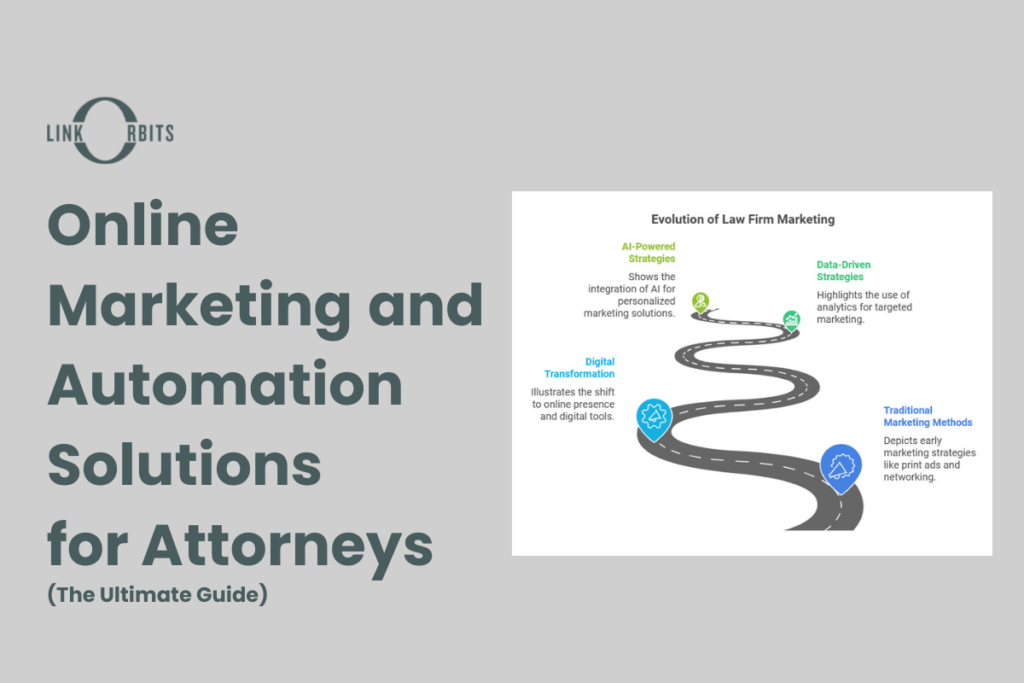
Direct Answer
Online marketing and automation solutions for attorneys help law firms attract qualified clients, improve online visibility, streamline administrative tasks, and increase revenue through digital tools. By combining SEO, content marketing, paid advertising, CRM systems, email automation, appointment scheduling, and AI-powered workflows, attorneys can spend less time on repetitive tasks and more time serving clients. The most successful law firms use automation alongside ethical marketing practices to create a consistent and professional client experience.
Why Online Marketing Matters for Modern Law Firms
The legal industry has become highly competitive. Today, most potential clients begin their search for legal services online before contacting an attorney. If your firm lacks a strong digital presence, you’re likely losing business to competitors with better visibility.
Effective online marketing allows attorneys to:
- Generate qualified leads
- Build credibility through educational content
- Improve local search rankings
- Increase website traffic
- Strengthen brand awareness
- Maintain long-term client relationships
Marketing is no longer optional—it’s an essential part of growing a modern law practice.
What Are Marketing Automation Solutions?
Marketing automation refers to software that performs repetitive marketing and administrative tasks without constant manual effort.
These solutions can automatically:
- Send follow-up emails
- Schedule consultations
- Capture website leads
- Organize client information
- Nurture potential clients
- Track marketing performance
- Deliver newsletters
- Manage online reviews
Automation helps attorneys remain responsive even outside business hours.
Key Components of an Attorney Marketing Strategy
Search Engine Optimization (SEO)
SEO helps law firms appear in Google search results when people search for legal services.
A strong SEO strategy includes:
- Local SEO
- Practice-area pages
- Keyword optimization
- Fast website speed
- Mobile-friendly design
- Quality legal content
- Internal linking
Higher rankings often translate into more qualified consultations.
Content Marketing
Educational content builds trust before prospects become clients.
Examples include:
- Legal guides
- Blog articles
- FAQs
- Videos
- Case studies
- Legal updates
- Downloadable resources
Helpful content positions attorneys as knowledgeable professionals.
Paid Advertising
Google Ads and social media advertising allow firms to reach clients immediately.
Paid campaigns work especially well for:
- Personal injury
- Family law
- Criminal defense
- Estate planning
- Immigration law
- Employment law
Careful targeting improves return on investment.
Comparison Table: Traditional Marketing vs Marketing Automation
| Feature | Traditional Marketing | Marketing Automation |
|---|---|---|
| Lead Follow-Up | Manual | Automatic |
| Appointment Scheduling | Phone Calls | Online Booking |
| Email Communication | Individual Emails | Automated Campaigns |
| Client Tracking | Paper Files | CRM Dashboard |
| Reporting | Limited | Real-Time Analytics |
| Time Required | High | Low |
| Scalability | Limited | Excellent |
Essential Automation Tools for Attorneys
CRM Systems
Customer Relationship Management software organizes client interactions.
Benefits include:
- Contact management
- Case tracking
- Communication history
- Lead scoring
- Task reminders
Everything stays organized in one place.
Email Automation
Email campaigns can automatically:
- Welcome new leads
- Share legal resources
- Confirm appointments
- Request reviews
- Send newsletters
- Follow up after consultations
Consistent communication increases client engagement.
Appointment Scheduling
Online scheduling software allows clients to book consultations without back-and-forth phone calls.
Advantages include:
- 24/7 availability
- Calendar synchronization
- Automated reminders
- Reduced missed appointments
Clients appreciate convenience.
Personal Experience: What We Have Observed
From working with businesses that rely on digital lead generation, one recurring pattern stands out: firms that respond quickly to inquiries consistently convert more prospects into paying clients.
We’ve seen law practices improve consultation rates simply by introducing automated email acknowledgments and online scheduling. Instead of waiting until the next business day, prospective clients receive an immediate confirmation, useful information about the consultation process, and a convenient booking link.
The technology itself isn’t the entire solution. The biggest improvement comes from combining automation with timely, personalized human follow-up. Automation handles routine tasks, while attorneys focus on providing legal expertise and building trust.
Case Study: Small Family Law Firm
A small family law practice struggled with inconsistent lead follow-up.
Their challenges included:
- Missed website inquiries
- Manual appointment scheduling
- Poor email organization
- Limited online visibility
The firm implemented:
- SEO improvements
- CRM software
- Automated email sequences
- Online booking
- Monthly educational blog posts
Results After Six Months
- Increased qualified website traffic
- Faster response times
- More scheduled consultations
- Reduced administrative workload
- Improved client satisfaction
The attorneys spent less time managing paperwork and more time serving clients.
Best Practices for Attorney Marketing Automation
Build a Professional Website
Your website should include:
- Attorney profiles
- Practice areas
- Client testimonials
- Contact information
- Consultation forms
- Educational content
A professional website often creates the first impression.
Focus on Local SEO
Most legal clients search within their city or region.
Optimize:
- Google Business Profile
- Local keywords
- Location pages
- Client reviews
- Local citations
This improves visibility for nearby searches.
Create Valuable Content
Publishing useful legal information demonstrates expertise.
Good topics include:
- Frequently asked legal questions
- Legal process explanations
- State-specific regulations
- Case preparation tips
- Common legal mistakes
Educational content builds trust before the first consultation.
Automate Client Communication
Automation can improve:
- Consultation reminders
- Intake forms
- Document requests
- Review requests
- Follow-up emails
Clients appreciate timely communication.
Common Challenges
Ethical Advertising Rules
Attorneys must comply with legal advertising regulations established by their jurisdiction.
Marketing should always remain truthful and transparent.
Data Privacy
Law firms handle confidential information.
Automation platforms should support strong security practices and protect client data.
Technology Adoption
Some firms hesitate to adopt new systems due to training requirements.
Starting with a few core automation tools often leads to smoother implementation.
Maintaining Personal Relationships
Automation should never replace meaningful attorney-client communication.
Instead, it should reduce repetitive administrative work while preserving personalized legal service.
Measuring Marketing Success
Track important performance indicators such as:
- Website traffic
- Consultation requests
- Conversion rate
- Cost per lead
- Email open rates
- Client reviews
- Search rankings
- Return on marketing investment
Regular reporting helps identify opportunities for improvement.
Future Trends in Attorney Marketing
The legal marketing landscape continues to evolve.
Emerging trends include:
- AI-powered client assistants
- Voice search optimization
- Personalized email campaigns
- Predictive analytics
- Marketing automation powered by artificial intelligence
- Video-first legal education
- Enhanced CRM integrations
Law firms that adapt early often gain a competitive advantage.
Expert Opinion
Digital marketing experts generally agree that successful law firms combine educational content, search engine optimization, automation, and responsive client service. Technology improves efficiency, but trust remains the foundation of every attorney-client relationship.
The most effective firms use automation to handle repetitive tasks while ensuring attorneys remain actively involved in legal advice, consultations, and client communication. This balanced approach supports sustainable growth without sacrificing professionalism.
Read More: tamildhooms
Pro-Tip
Don’t automate everything. Use automation for scheduling, reminders, email follow-ups, and lead management, but keep consultations, legal advice, and relationship-building personal. Clients hire attorneys for expertise and trust, and automation should enhance—not replace—that experience.
Frequently Asked Questions
What is marketing automation for attorneys?
Marketing automation uses software to streamline lead generation, email communication, appointment scheduling, client follow-ups, and reporting, helping law firms save time and improve efficiency.
Is SEO important for law firms?
Yes. SEO helps attorneys appear in search engine results when potential clients look for legal services, increasing visibility and generating qualified leads.
Which marketing channels work best for attorneys?
A combination of SEO, content marketing, local search optimization, Google Ads, email marketing, and client reviews typically provides the best long-term results.
Can automation improve client communication?
Yes. Automated appointment reminders, follow-up emails, intake forms, and newsletters help firms communicate consistently while reducing manual administrative work.
How do attorneys choose the right marketing automation solution?
Attorneys should evaluate ease of use, CRM integration, security, reporting features, scalability, compliance support, and the specific needs of their practice before selecting a marketing automation platform.